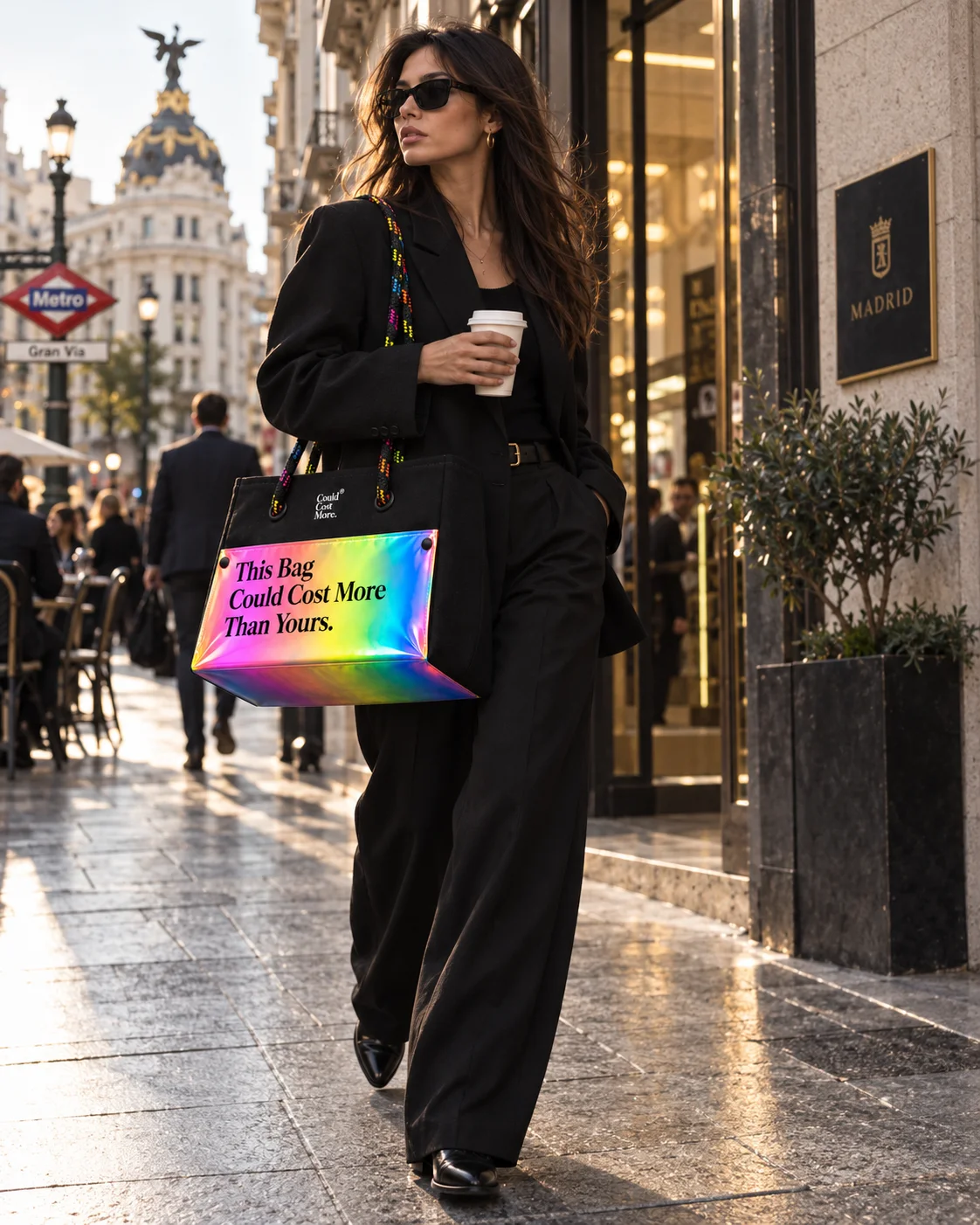
The brand
The best explanation
is that you like it.
I · Concept
You didn’t choose it to pass an exam.
You chose that bag because something in it caught you: a shape, a sentence, a way of being with you.
The questions came afterwards. Whether it was too much. Whether it was appropriate. Whether it cost a lot. Whether you were really going to carry it.
Could Cost More. starts at a simple answer: I like it.
II · Drawing
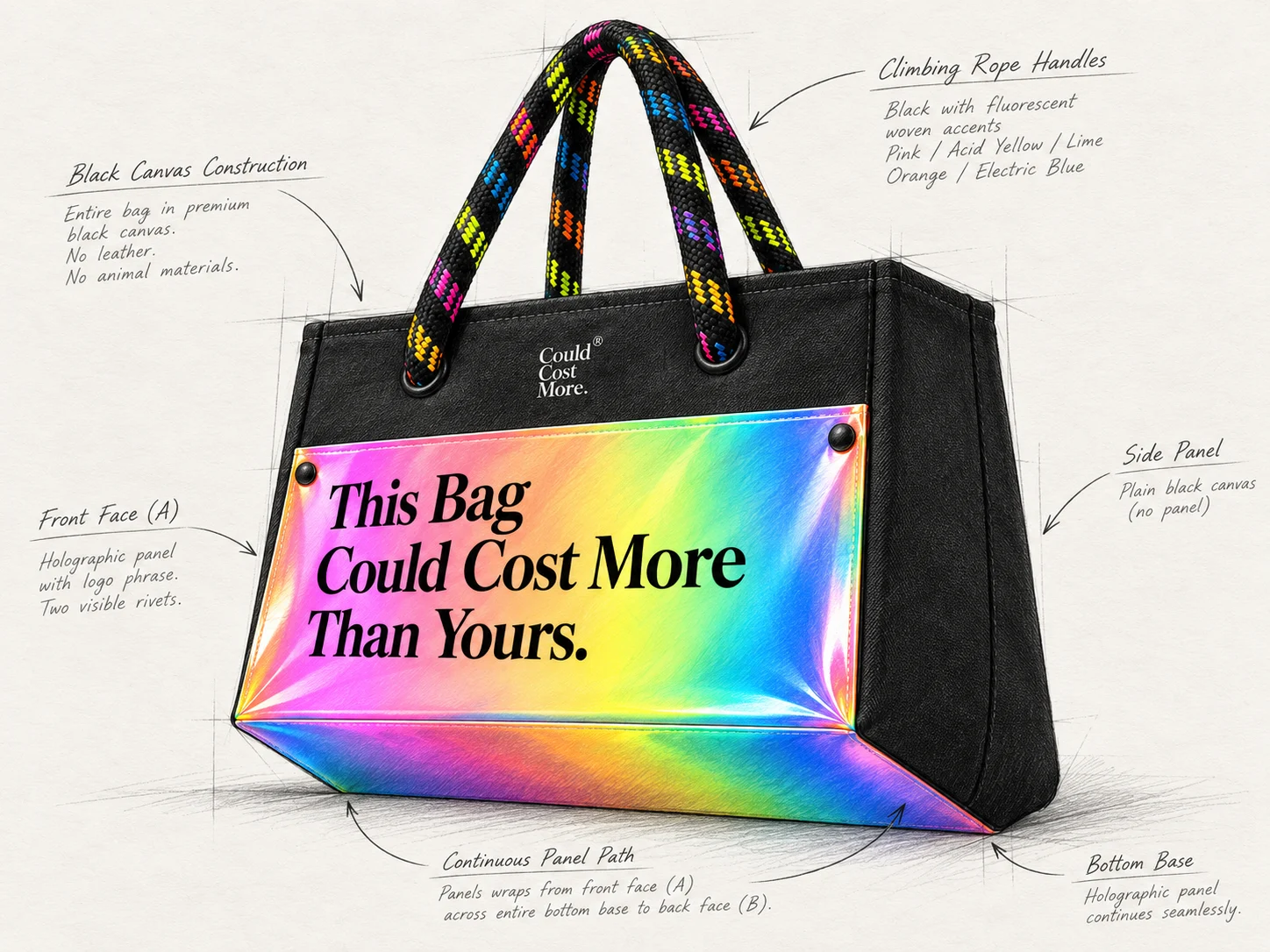
Everything is decided on paper first.
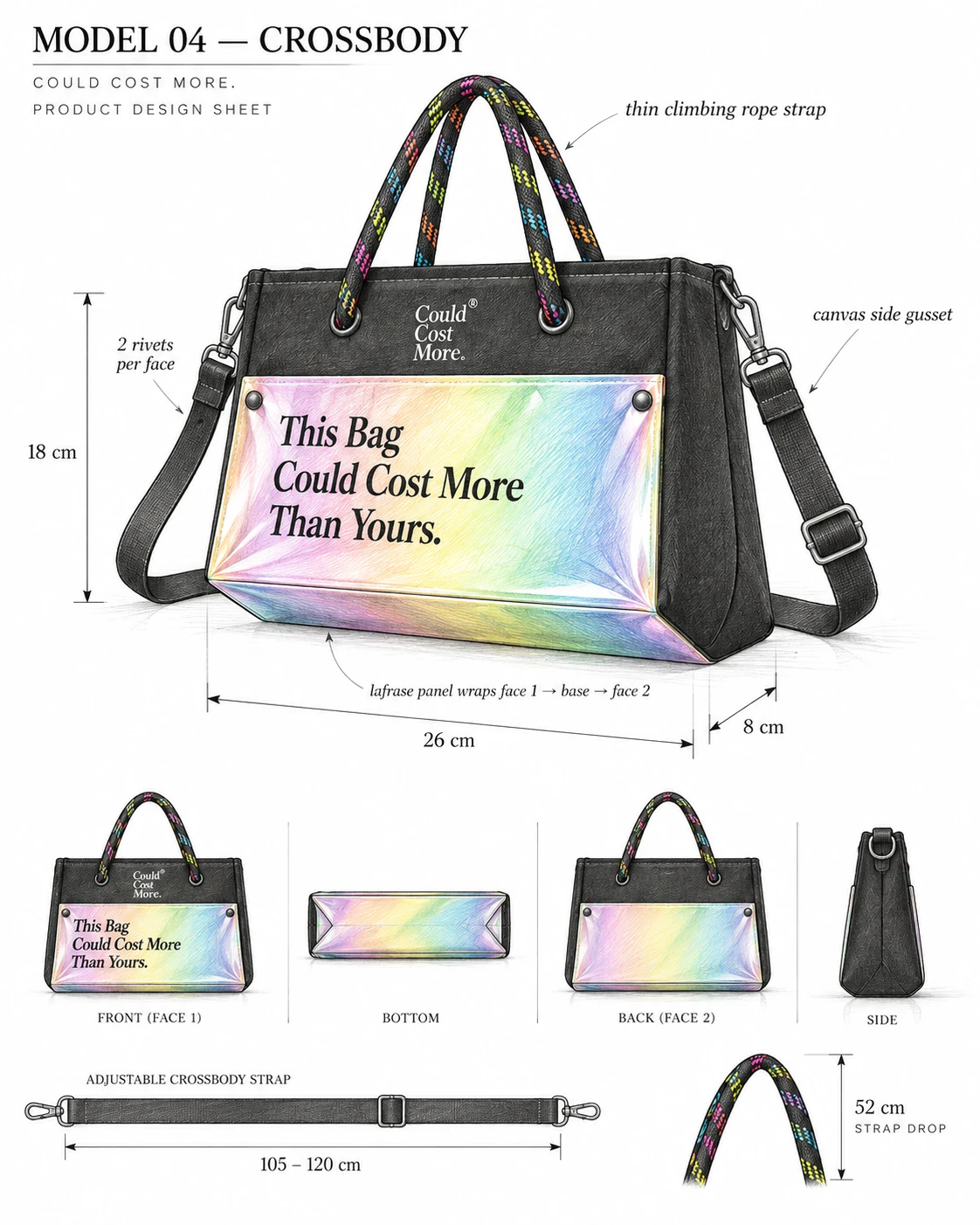
Where the gradient starts. How thin the rope can be before it stops being rope. Where the mark sits so it is read and not announced.
The drawing names the materials out loud, including the ones we do not use: no leather, no animal materials. Black canvas, and that is the whole list.
III · Materials
Black canvas. Nothing that used to be an animal.
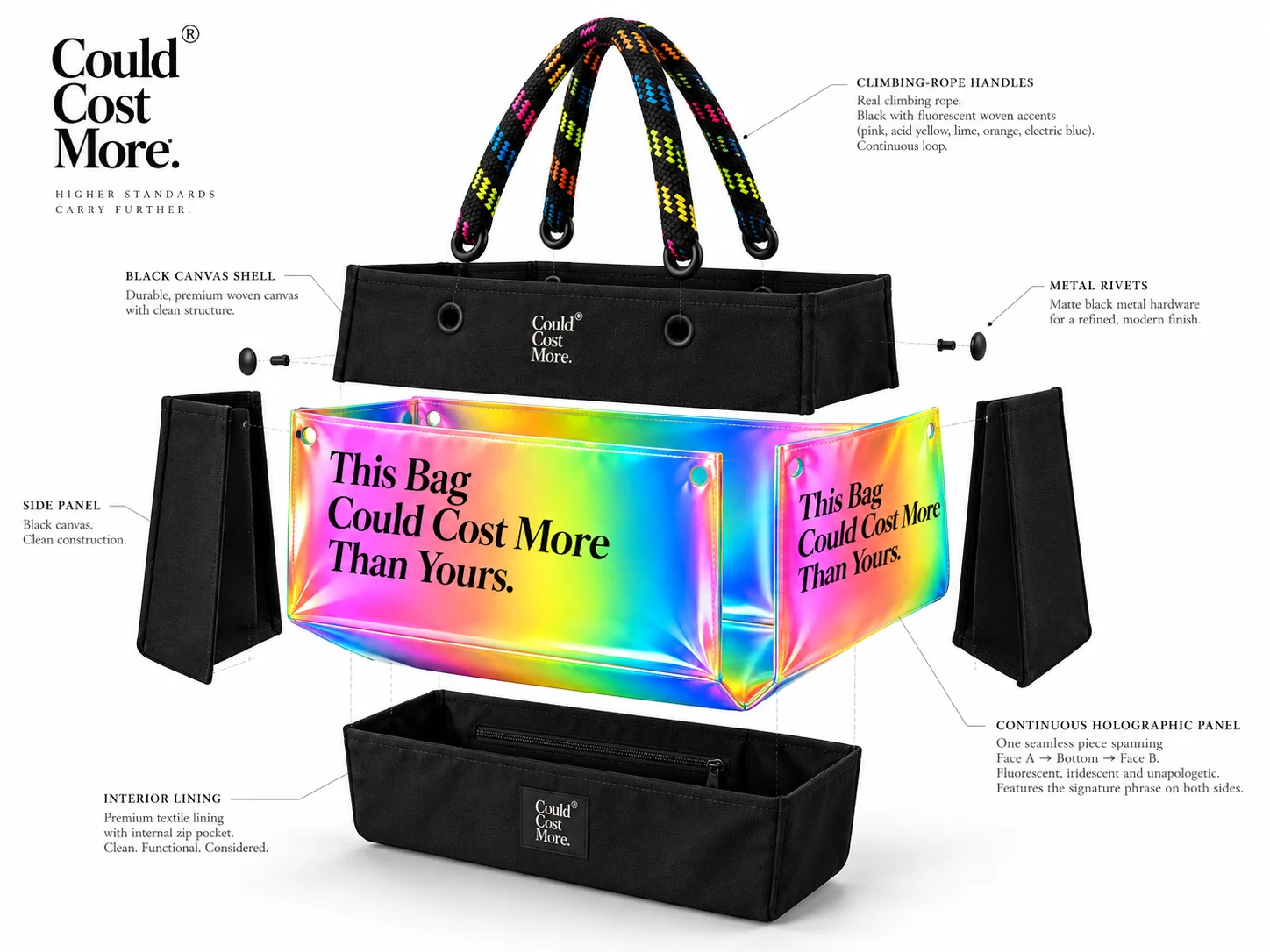
A premium woven canvas, the same black on the shell, the side panels and the base. Inside, a textile lining with a zip pocket.
Canvas is not the cheap decision here. It is the one that lets the bag keep its shape without a frame, and the one we can name without an asterisk.
IV · Construction
Cut, assembled, and then checked against the drawing.
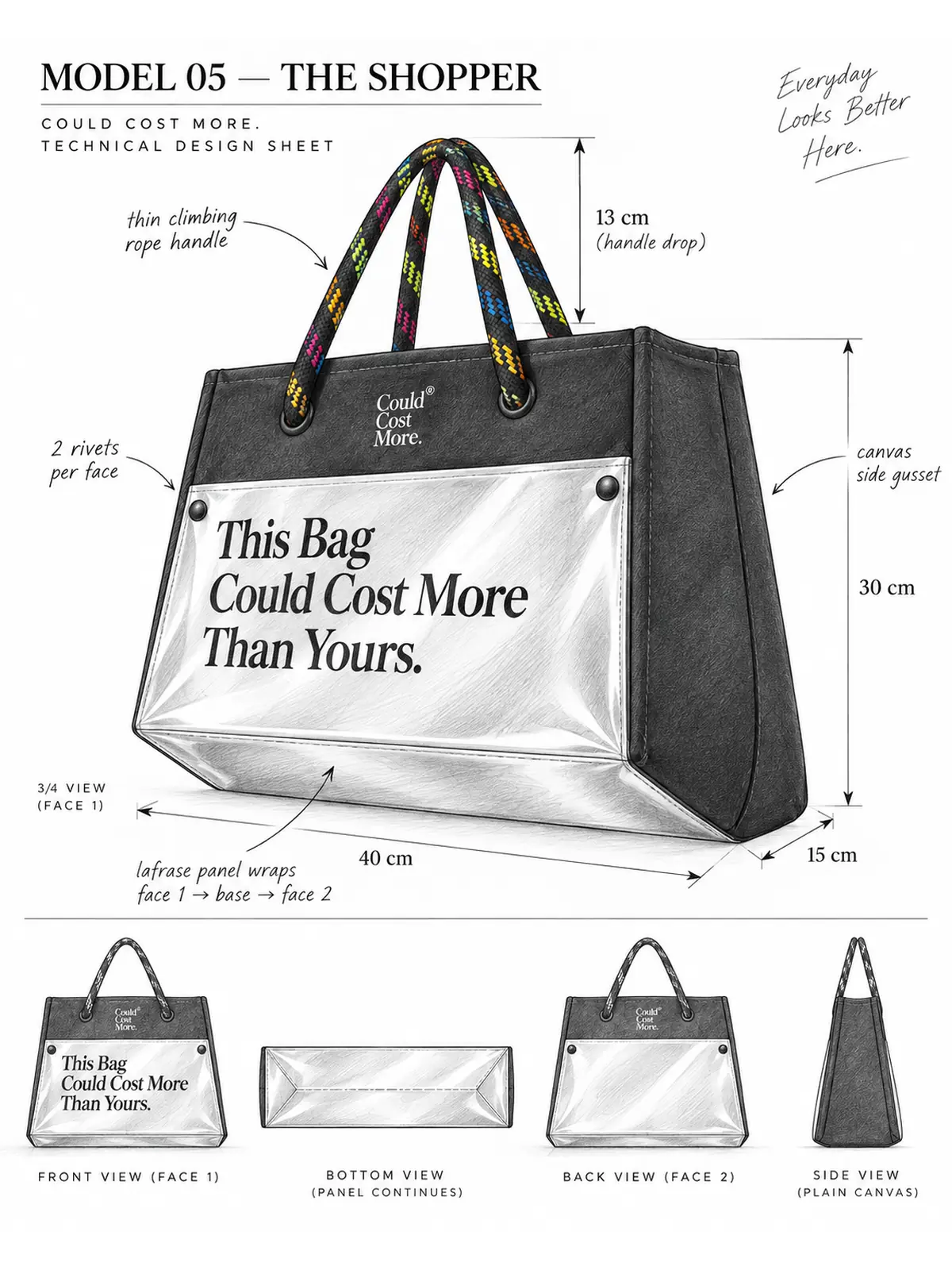
Every model has its own sheet: handle drop, height, width, depth at the base. The sheet is not decoration — it is what the workshop works from and what the finished bag is measured against.
V · The sentence
Both faces say it. Not just the one facing out.
The panel carries the line in black over a fluorescent gradient: “This Bag Could Cost More Than Yours.”
It is on face A and on face B. Whichever way the bag turns, it is still saying it. A sentence that only works from one angle is a slogan; this one is the object.
VI · One continuous panel
Face A, the whole base, face B.
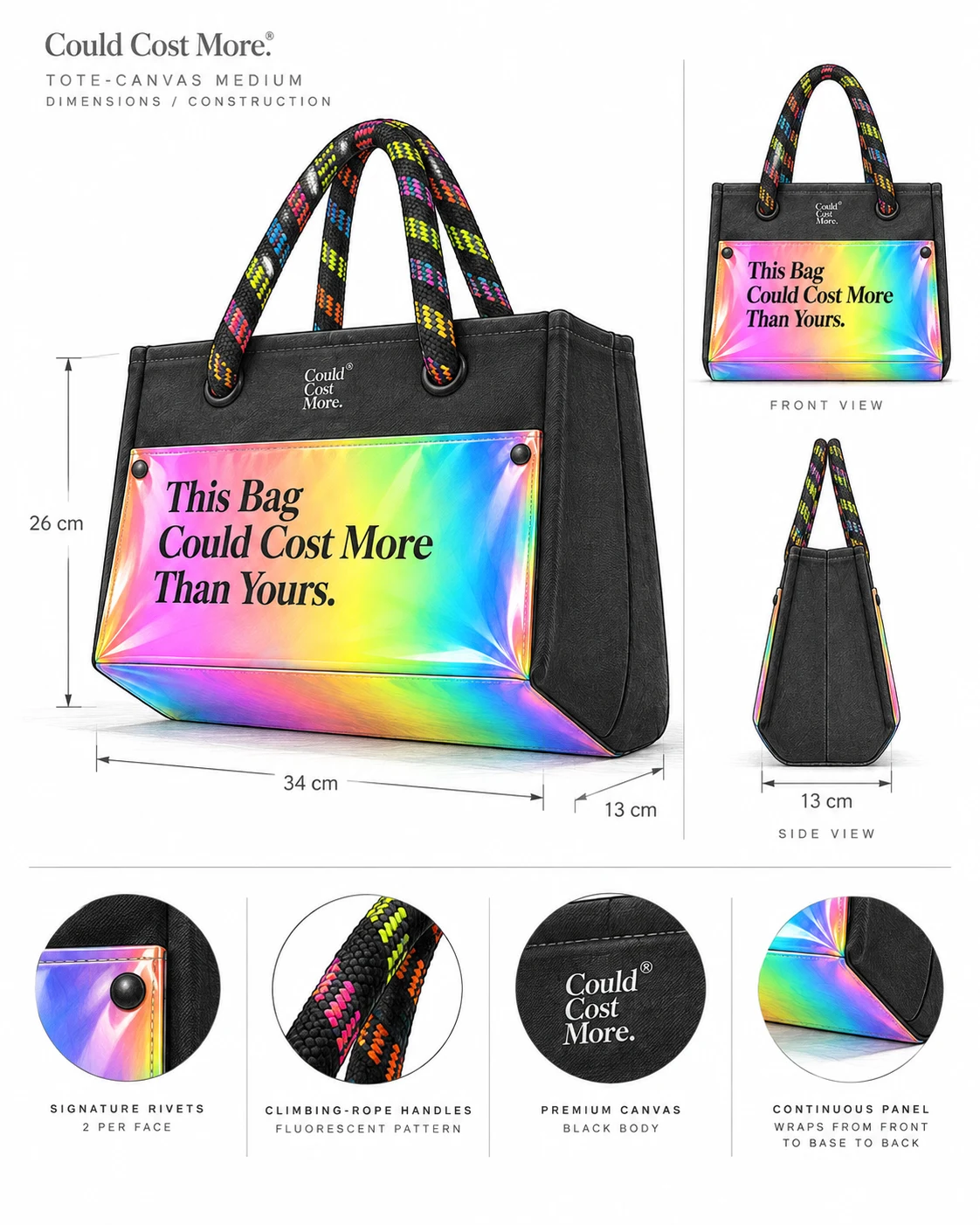
The gradient does not stop at the front edge. It runs down, crosses the entire base and climbs the other side. Face A + base + face B are a single continuous surface.
Which is why the bottom view is in every sheet. It is the part nobody photographs and the part that proves it.
VII · The rope
Real climbing rope, and thin.
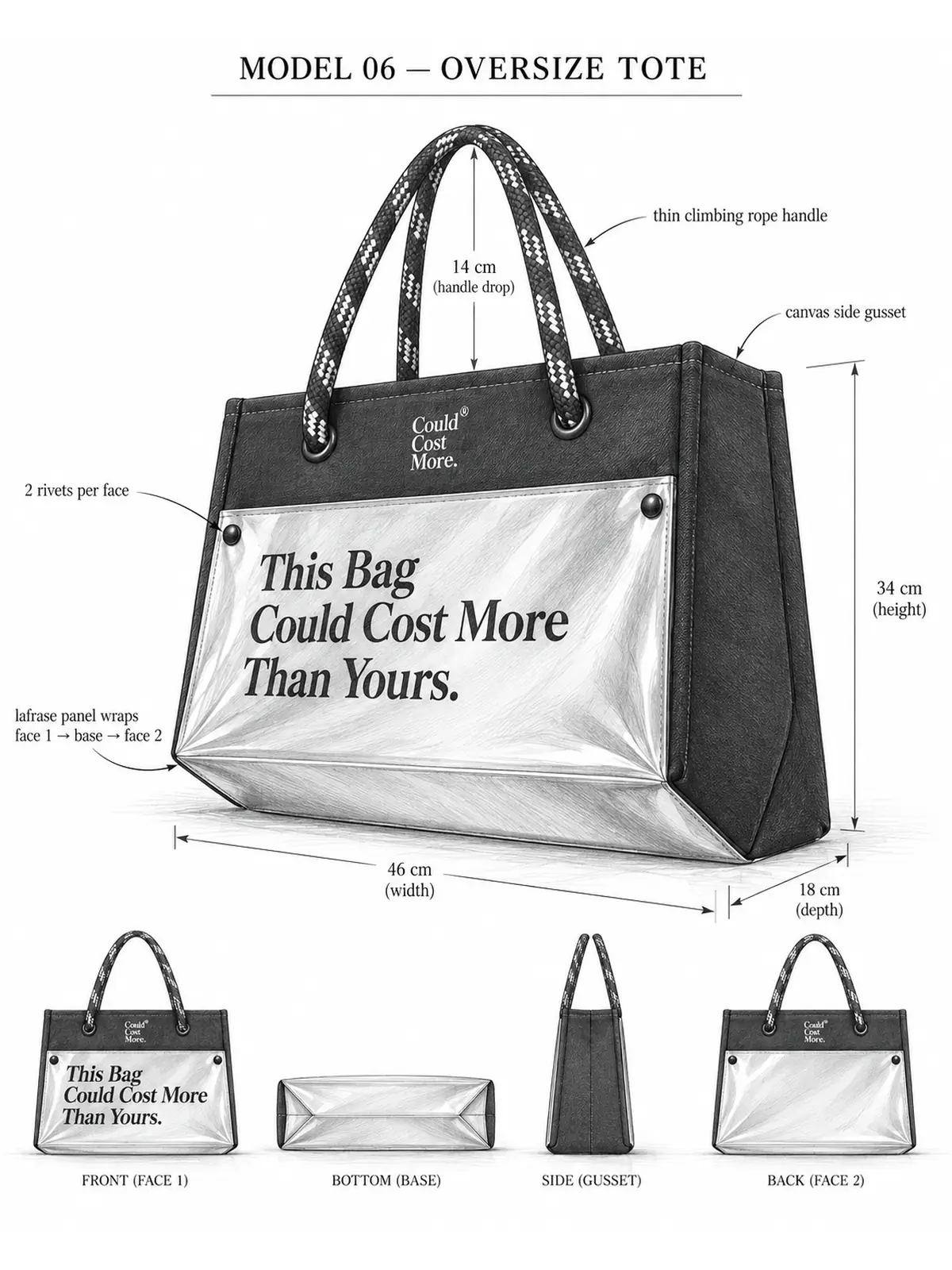
Black, with a fluorescent weave running through it: pink, acid yellow, lime, orange, electric blue. Always mixed with black, never on their own.
Thin on purpose. A thick rope turns the bag into sportswear; a thin one keeps it a proportion, which is the only reason it is there.
VIII · The rivets
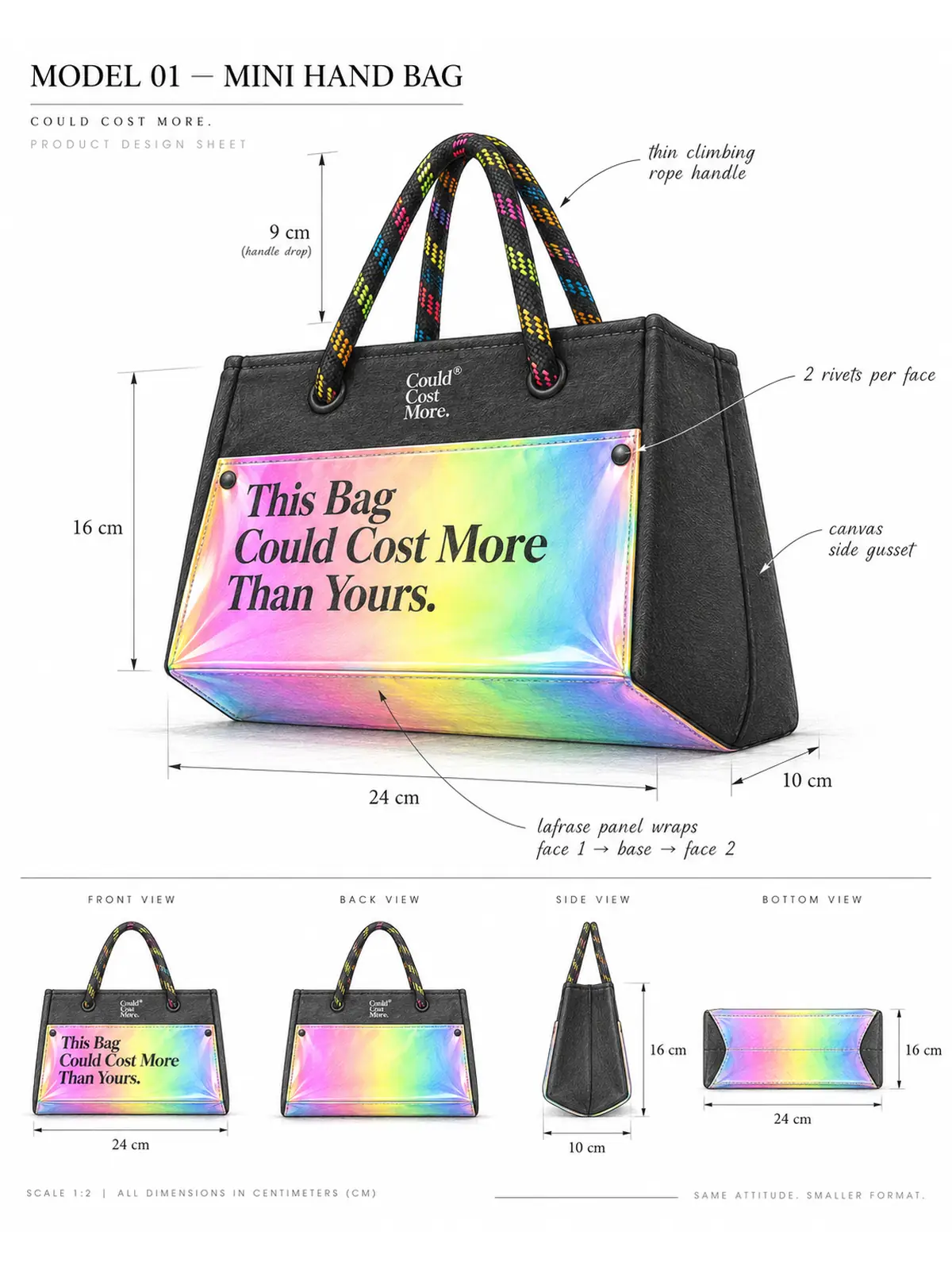
Two per face. Visible.
They hold the panel and they are not hidden. Two on face A, two on face B — the same on every model, from the smallest to the oversize.
Hardware that has to be concealed is usually hardware that is not up to the job.
IX · Finished
And then it is only an object again.
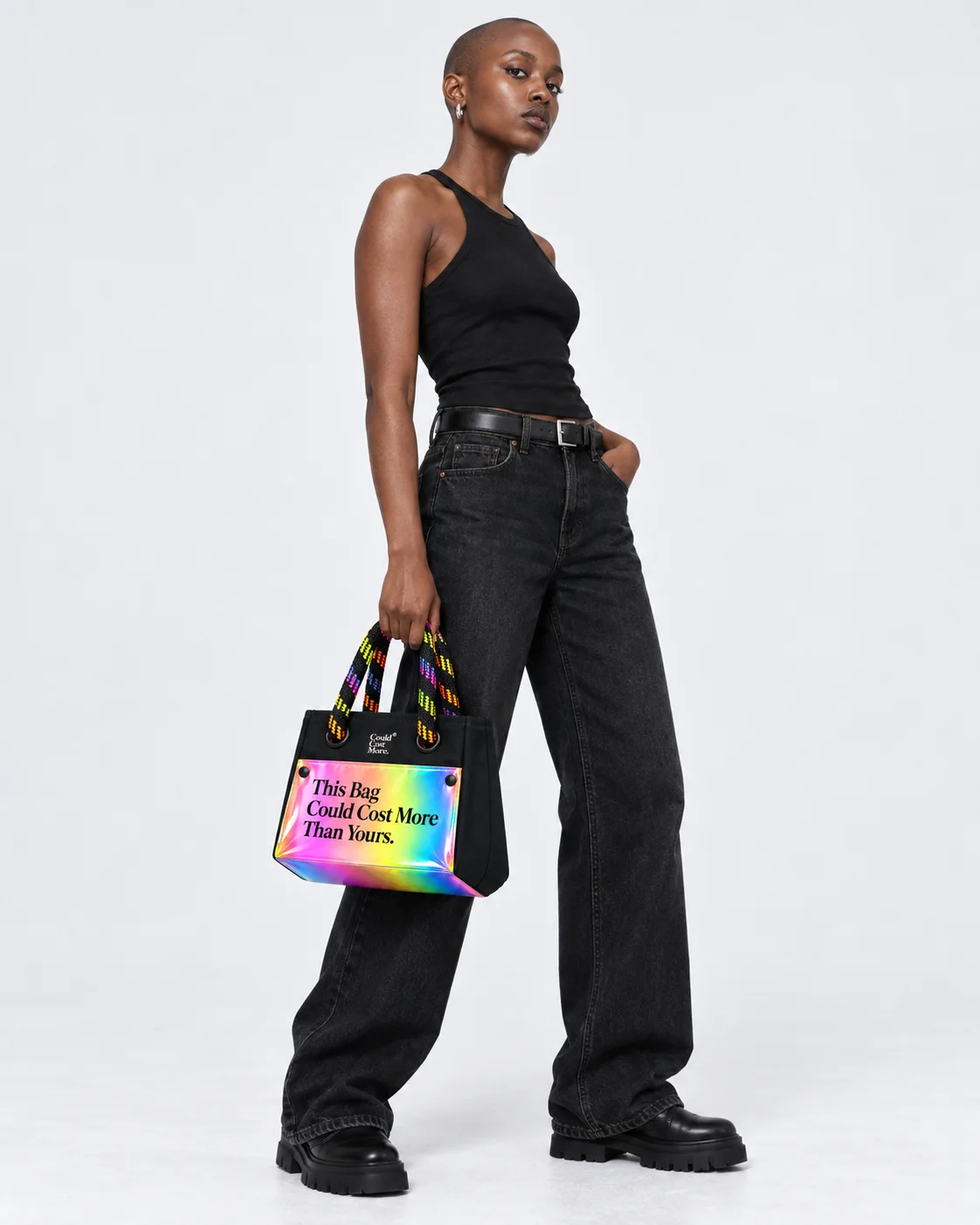
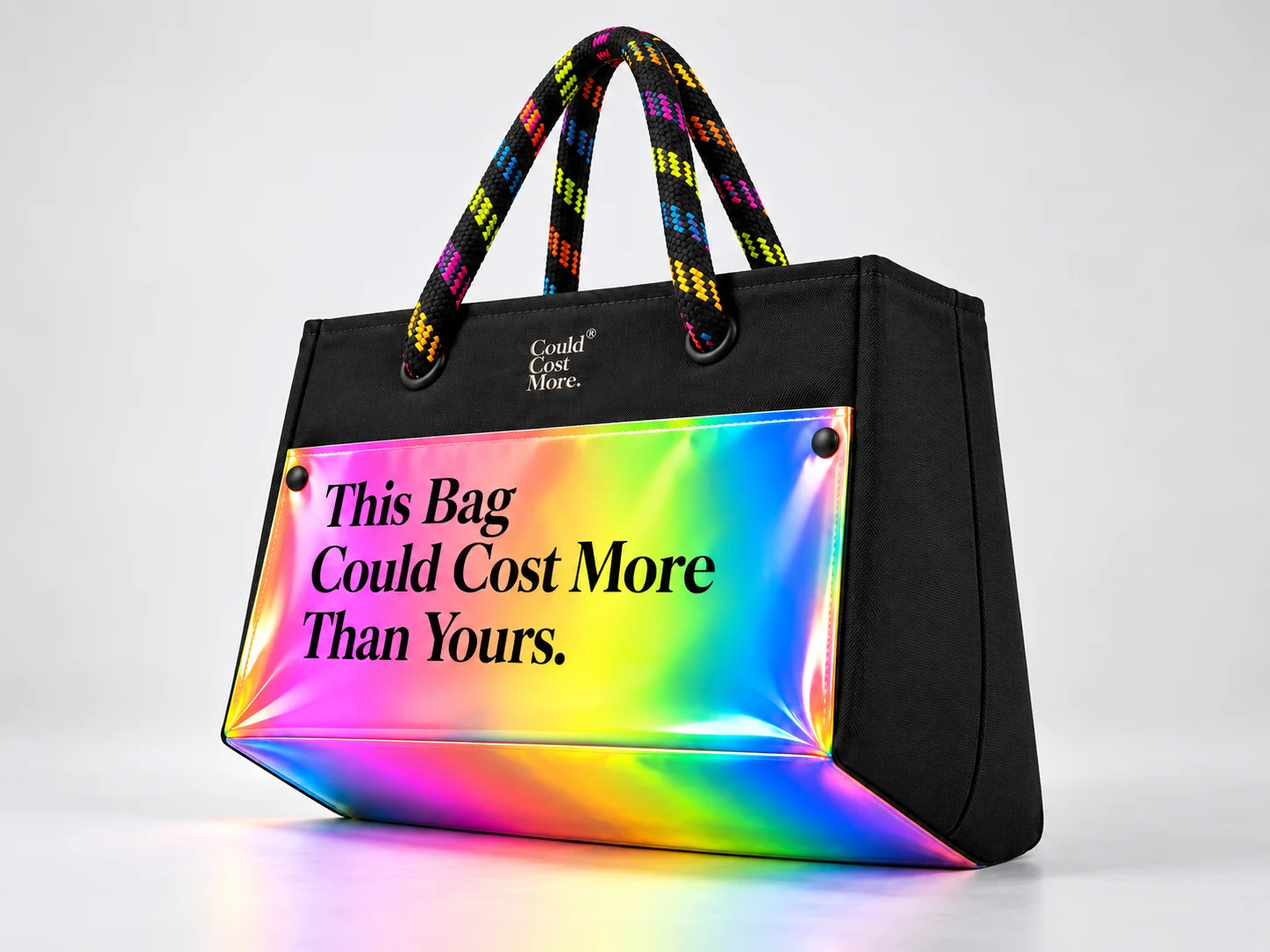
Black canvas, a rope, a gradient that crosses the base, four rivets and a sentence. Nothing that needs a paragraph underneath it.
X · In use
The part we don’t decide.
Where it goes, what it is carried with, whether it is worn as a joke or as a statement. That stops being ours the moment it leaves.
It could cost more than yours. It could not.